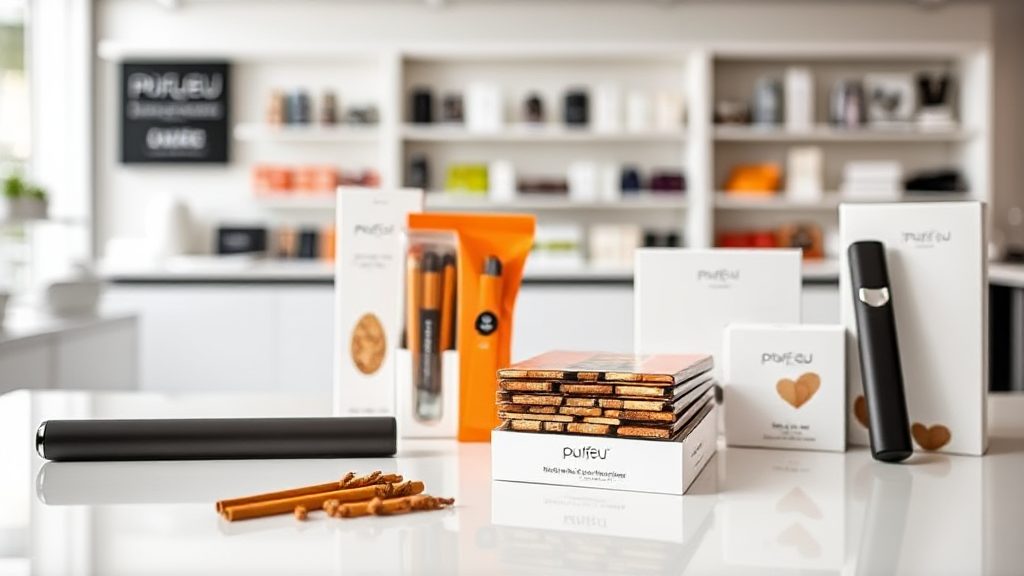
Shisha Tobacco Alongside Other Smoke-Free Categories
This article compares shisha tobacco with other smoke-free product categories in descriptive terms only. It does not rank them or declare a best option; the goal is to help an adult reader understand how each category works, what it contains, and where the trade-offs sit. The reference point for shisha tobacco is the https://puff-eu.com/product-category/shisha-tobacco/overdose-shisha-tobacco/ category, which lists flavoured molasses-based tobacco blends intended for water-pipe use.
Shisha tobacco is a moist blend of tobacco leaf, molasses or glycerin, and flavourings, smoked through a hookah after being heated by charcoal. It is not a heat-not-burn stick, not a nicotine pouch, and not a vapour product, and treating those categories as interchangeable leads to practical mistakes. The sections below place shisha tobacco beside heated tobacco, nicotine pouches, and vapour products so the differences are visible side by side.
What Shisha Tobacco Actually Is
Shisha tobacco, sometimes called hookah tobacco or mu’assel, is a tobacco product designed for indirect heating. The blend is packed into a bowl, covered with foil or a screen, and heated from above by burning charcoal. The smoke passes through a water chamber before inhalation, which cools it and filters some particulate matter, though it does not remove the health risks associated with tobacco use.
The format matters for comparison. Shisha tobacco is sold by weight, usually in 50 g, 100 g, or 250 g packs, and the flavour range is broad because the glycerin and molasses base carries aroma well. Strength varies by blend and by how tightly the bowl is packed, so two products from the same brand can deliver noticeably different experiences. Shisha tobacco is a combustible-adjacent product heated by charcoal, not a sealed electronic device.
How the category is typically presented
- Sold by weight in resealable packs, often with strength and flavour descriptors.
- Requires a hookah setup: bowl, stem, base, hose, grommets, and charcoal or an electric burner.
- Session length is usually longer than a cigarette or a heated tobacco stick, often 30 to 60 minutes.
- Cleanup involves rinsing the base, bowl, and hose, and disposing of ash and spent tobacco.
Heated Tobacco Sticks Compared With Shisha Tobacco
Heated tobacco products use a battery-powered device that heats a prepared tobacco stick to a controlled temperature without a charcoal flame. The stick is factory-made, sealed, and used once, which removes the packing and charcoal steps that define a hookah session. Brands in this space include TEREA, LEVIA, DELIA, VEO, and NEO sticks, and devices such as IQOS, glo, and Ploom are built around them.
The comparison comes down to control and ritual. Heated tobacco offers a fixed dose per stick and a short session, typically a few minutes, with no ash and no water chamber. Shisha tobacco offers a longer, more variable session and a much wider flavour catalogue, but it demands setup time, charcoal handling, and cleaning. Neither format is smoke-free in the sense of being risk-free; both involve tobacco and both carry health warnings.
Practical differences at a glance
| Feature | Shisha tobacco | Heated tobacco sticks |
|---|---|---|
| Heat source | Charcoal or electric burner | Battery-powered heating element |
| Session length | Often 30–60 minutes | Usually a few minutes per stick |
| Setup and cleanup | Packing, charcoal, rinsing | Insert stick, dispose after use |
| Format | Loose moist tobacco by weight | Sealed single-use sticks |
| Flavour range | Very broad, brand-dependent | Broad but standardised per line |
For a reader who already owns a heated tobacco device, adding shisha tobacco means adding a separate setup and a different routine. For a reader who enjoys the hookah ritual, heated tobacco is a shorter, more portable alternative rather than a replacement for the same experience.
Nicotine Pouches and Vapour Products as Adjacent Categories
Nicotine pouches are placed under the upper lip and contain nicotine with plant fibres, without tobacco leaf and without any heating or inhalation. They are the most discreet category in this comparison: no device, no vapour, no charcoal, and no session length in the usual sense. The trade-off is that they deliver nicotine only, with no flavour-through-smoke experience and no ritual comparable to a hookah.
Vapour products sit between pouches and tobacco formats. A device heats a liquid, usually containing nicotine, propylene glycol, vegetable glycerin, and flavourings, into an aerosol. There is no tobacco leaf and no combustion, but there is a device to maintain, coils or pods to replace, and a battery to charge. Compared with shisha tobacco, vapour products are more portable and require less cleanup, while shisha tobacco offers a tobacco-based blend with a much longer session.
Where the categories diverge most
- Inhalation: shisha and vapour involve inhaling an aerosol or smoke; pouches do not.
- Device dependence: shisha needs a hookah; vapour needs a vape device; heated tobacco needs a compatible device; pouches need nothing.
- Session structure: shisha is long and social; heated tobacco is short and fixed; pouches are continuous and unobtrusive; vapour sits in between.
- Flavour delivery: shisha and vapour carry the widest flavour ranges; heated tobacco is standardised per stick line; pouches vary by brand.
Choosing Between Categories Without a Ranking
A fair comparison ends with fit rather than a winner. Shisha tobacco suits an adult who wants a long, flavour-forward session and is willing to manage a hookah, charcoal, and cleaning. Heated tobacco suits someone who wants a short, controlled session with a sealed stick and a rechargeable device. Nicotine pouches suit a reader who wants discretion and no inhalation at all. Vapour products suit a reader who wants a reusable device and a broad liquid market.
Cost and maintenance also differ by category. Shisha tobacco has a low per-gram cost but requires a hookah, charcoal, and time. Heated tobacco has a higher device cost and ongoing stick purchases. Pouches have no device cost but a recurring product cost. Vapour products combine device, coil, and liquid costs. None of these is inherently cheaper over a year; it depends on how often the product is used and how much equipment the reader already owns.
The safest conclusion is descriptive: each category solves a different problem, and the right choice depends on session length, device tolerance, inhalation preference, and how much setup the reader is willing to accept. Readers comparing shisha tobacco with heated tobacco, pouches, or vapour products should check local age restrictions, product labelling, and health warnings before buying, and should treat every tobacco and nicotine product as carrying risk.